Dr. Lori Gore-Green | Women's Health Professional

Dr. Lori Gore-Green's Portfolio of Experience as a Women's Health Professional

  • Dr. Lori Gore-Green’s Biography
  • Texas Health Presbyterian Hospital
  • Dr. Lori Gore-Green Blog
  • Contact
  • Presentations by Dr. Lori Gore-Green
  • Multimedia

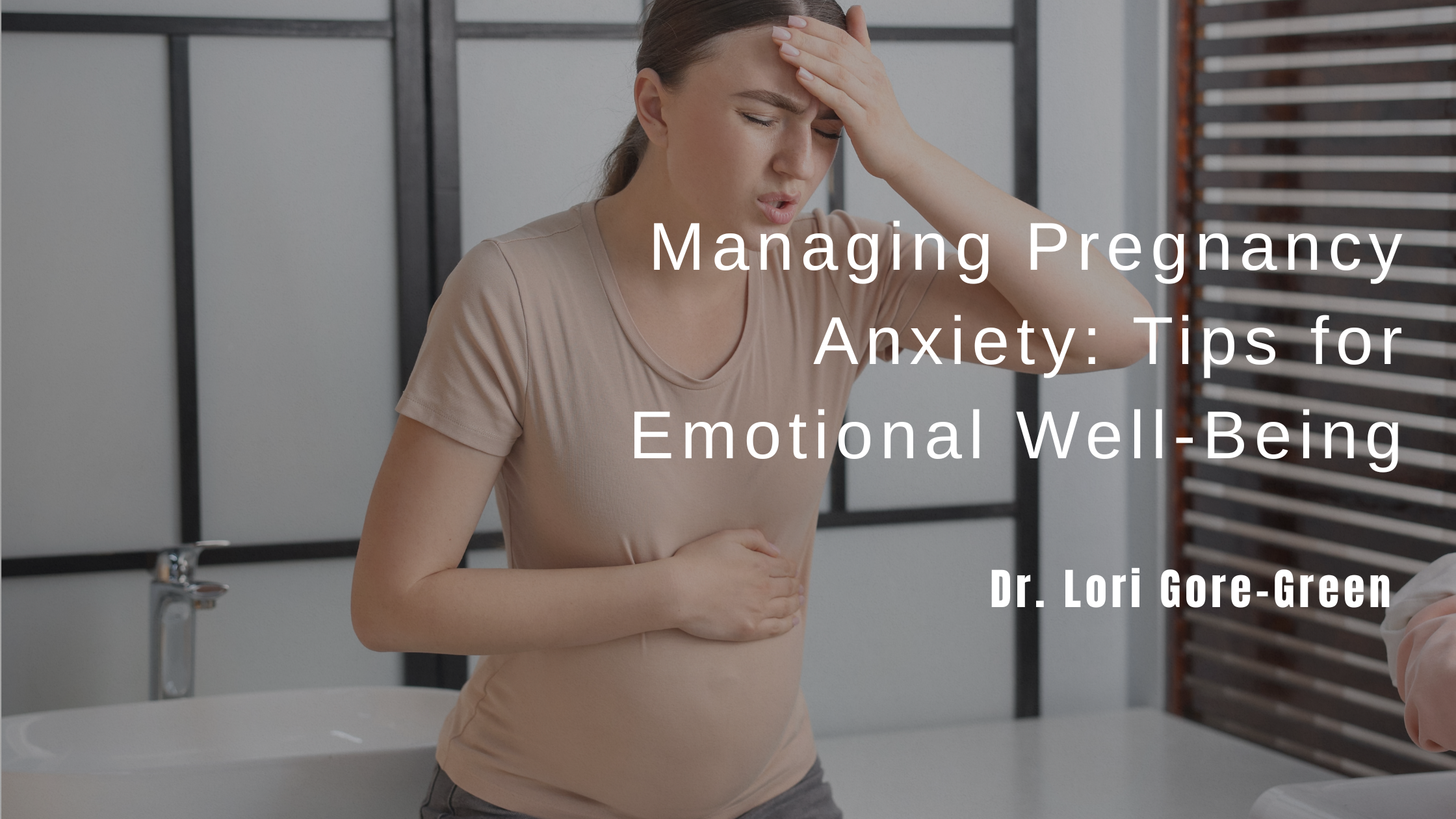
Managing Pregnancy Anxiety: Tips for Emotional Well-Being

March 2, 2026 by Dr. Lori Gore-Green

Pregnancy is often described as one of the most joyful seasons of life. Yet for many women, it is also a time filled with uncertainty, vulnerability, and anxiety. Physical changes, hormonal shifts, lifestyle adjustments, and concerns about labor, parenting, and the baby’s health can feel overwhelming. If you’re experiencing anxiety during pregnancy, you are not alone — and you are not failing. Emotional well-being is just as important as physical health during this transformative journey.

Below are practical, compassionate strategies to help manage pregnancy anxiety and cultivate a calmer, more grounded experience.


1. Acknowledge Your Feelings Without Judgment

The first step in managing anxiety is recognizing it. Many expectant mothers feel guilty for worrying during what is “supposed” to be a happy time. But emotions are not right or wrong — they are signals.

Ask yourself:

  • What specifically am I worried about?

  • Is this fear based on facts, assumptions, or past experiences?

  • What would I say to a friend feeling this way?

Journaling can be especially helpful. Writing down anxious thoughts often reduces their intensity and helps you identify patterns or triggers.


2. Limit Information Overload

We live in an era of constant information. While access to knowledge can be empowering, too much exposure — especially to worst-case scenarios online — can heighten anxiety.

Try these boundaries:

  • Choose one or two trusted medical sources.

  • Avoid late-night internet searches.

  • Limit time in online forums if they increase fear rather than reassurance.

Remember: every pregnancy is unique. Reading about rare complications does not make them more likely to happen to you.


3. Prioritize Gentle Movement

Exercise during pregnancy, when approved by your healthcare provider, can significantly reduce anxiety. Movement releases endorphins, improves sleep, and reconnects you with your body in a positive way.

Consider:

  • Prenatal yoga

  • Walking outdoors

  • Swimming

  • Light stretching routines

Even 20 minutes of gentle movement can calm racing thoughts and restore emotional balance.


4. Practice Mindful Breathing

Anxiety often shows up physically — rapid heartbeat, tight chest, shallow breathing. Slowing your breath signals safety to your nervous system.

Try this simple technique:

  1. Inhale slowly for 4 counts.

  2. Hold for 4 counts.

  3. Exhale for 6 counts.

  4. Repeat for 2–3 minutes.

This can be especially helpful before prenatal appointments, bedtime, or whenever worries begin to spiral.


5. Build a Support Circle

You don’t have to carry anxiety alone. Share your concerns with:

  • Your partner

  • A trusted friend or family member

  • Your midwife or OB provider

  • A therapist experienced in perinatal mental health

Sometimes anxiety decreases simply by being heard. Professional counseling can also provide tools to manage intrusive thoughts or persistent worry.


6. Focus on What You Can Control

Pregnancy involves many unknowns. While you can’t control every outcome, you can influence daily habits that support your well-being.

Shift your focus to:

  • Eating nourishing meals

  • Staying hydrated

  • Attending prenatal appointments

  • Getting adequate rest

  • Preparing a birth plan (while staying flexible)

Small, consistent actions build confidence and reduce feelings of helplessness.


7. Strengthen Your Birth Confidence

Fear of labor and delivery is common. Education can transform fear into empowerment. Consider:

  • Taking childbirth education classes

  • Discussing your birth preferences with your provider

  • Learning pain management techniques

  • Reading positive birth stories

Understanding the physiological process of birth often reduces anxiety and increases trust in your body’s capabilities.


8. Create a Calming Daily Ritual

A simple daily ritual can anchor your emotions. This might include:

  • Morning gratitude journaling

  • Evening herbal tea and reflection time

  • Listening to calming music

  • Reading affirmations aloud

Consistency builds emotional resilience. Even 10 quiet minutes per day can create a sense of stability amid change.


9. Watch for Signs of Perinatal Anxiety Disorders

Occasional worry is normal. However, persistent anxiety that interferes with sleep, appetite, or daily functioning may signal a perinatal anxiety disorder.

Seek professional help if you notice:

  • Constant intrusive thoughts

  • Panic attacks

  • Excessive reassurance-seeking

  • Inability to relax at any time

Treatment options — including therapy and, in some cases, medication — are safe and effective during pregnancy. Early support benefits both mother and baby.


10. Practice Self-Compassion

Perhaps the most powerful tool for emotional well-being is self-compassion. Pregnancy asks a great deal of your body and mind. You are growing a human being — that alone is extraordinary.

Instead of striving to feel calm all the time, aim to respond gently when anxiety appears. Speak to yourself with kindness. Rest when you need to. Ask for help without apology.


A Final Thought

Pregnancy anxiety does not define your motherhood. It reflects how deeply you care. With awareness, support, and intentional self-care, you can navigate this season with greater confidence and peace.

Emotional well-being is not about eliminating worry entirely — it’s about building tools to move through it. As you prepare to welcome new life, remember to nurture your own heart and mind along the way.

create without mentioning any medicine or medication anything related. create only generic blog

Managing Pregnancy Anxiety: Tips for Emotional Well-Being

Pregnancy is a powerful and life-changing journey. Along with excitement and anticipation, it can also bring moments of worry and uncertainty. Concerns about your baby’s health, upcoming labor, body changes, or the transition into parenthood are completely natural. Managing pregnancy anxiety isn’t about eliminating worry altogether — it’s about developing healthy ways to respond to it so you can feel more grounded and supported.

Here are practical, gentle strategies to help you protect your emotional well-being during pregnancy.


Acknowledge That Anxiety Is Normal

First, give yourself permission to feel what you’re feeling. Pregnancy involves physical, hormonal, and lifestyle changes that can heighten emotions. Rather than judging yourself for feeling anxious, recognize it as a sign that you care deeply about your growing baby and your future as a parent.

When anxious thoughts arise, try naming them:
“I’m feeling worried about the delivery.”
“I’m feeling uncertain about being prepared.”

Labeling emotions can reduce their intensity and help you feel more in control.


Limit Overexposure to Information

While it’s helpful to be informed, too much information can quickly become overwhelming. Constantly searching online or reading worst-case stories may increase fear rather than ease it.

Choose a few trusted sources for pregnancy guidance and avoid late-night research sessions. If certain conversations or social media accounts trigger anxiety, give yourself permission to step back. Protecting your peace is part of prenatal care.


Establish a Calming Daily Routine

Structure creates a sense of safety. Building small daily rituals into your routine can stabilize emotions and provide something steady to rely on.

Simple calming practices include:

  • A short morning gratitude journal

  • Gentle stretching before bed

  • Listening to soothing music

  • Reading a few pages of an uplifting book

  • Spending quiet time outdoors

Consistency matters more than length. Even 10 minutes a day can make a noticeable difference.


Practice Mindful Breathing

Anxiety often shows up physically — tight shoulders, shallow breathing, racing thoughts. Deep breathing signals your body to relax.

Try this simple exercise:

  • Inhale slowly for four counts

  • Pause briefly

  • Exhale slowly for six counts

  • Repeat for a few minutes

You can practice this while lying in bed, sitting in your car, or waiting for an appointment. It’s a portable tool you can use anytime.


Stay Connected to Your Body in Positive Ways

Pregnancy transforms your body, and that transformation can feel unfamiliar. Gentle movement can help you reconnect in a positive, empowering way.

Consider:

  • Walking outdoors

  • Prenatal yoga

  • Light stretching

  • Relaxed swimming

Movement releases tension and encourages emotional balance. Always move in ways that feel comfortable and supportive for your body.


Focus on What You Can Control

Much of pregnancy involves uncertainty. Instead of dwelling on unknowns, shift your attention to daily actions within your control.

You can:

  • Nourish your body with balanced meals

  • Stay hydrated

  • Rest when you’re tired

  • Prepare your home gradually

  • Create a flexible birth preferences plan

Small, consistent steps build confidence and reduce feelings of helplessness.


Talk About Your Fears

Anxiety often grows in silence. Sharing your concerns with a partner, friend, family member, or trusted birth professional can lighten the emotional load.

Sometimes you don’t need solutions — you just need to feel heard. Honest conversations can normalize your experience and remind you that you’re not alone in your worries.


Reduce “What If” Thinking

Pregnancy anxiety often centers on “what if” thoughts.
“What if something goes wrong?”
“What if I’m not ready?”

When you notice this pattern, gently redirect your thoughts toward the present moment. Ask yourself:

  • What is true right now?

  • What evidence supports this fear?

  • What is going well today?

Grounding yourself in the present helps prevent your mind from spiraling into imagined futures.


Prepare for Birth With Confidence

Fear of labor is common. Learning about the birth process, exploring comfort techniques, and discussing your preferences with your care team can replace fear with understanding.

Education builds trust — trust in your body, trust in your preparation, and trust in your support system. Confidence grows when you feel informed and empowered.


Prioritize Rest and Boundaries

Pregnancy requires energy — physically and emotionally. Protect your rest and set gentle boundaries when needed.

It’s okay to:

  • Decline events when you’re tired

  • Ask for help with household tasks

  • Take breaks from stressful conversations

  • Limit time around negativity

Your well-being matters.


Cultivate Self-Compassion

Above all, treat yourself with kindness. You are navigating change on multiple levels at once. Some days will feel calm and joyful; others may feel uncertain. Both are part of the journey.

Instead of striving for constant peace, aim for compassionate awareness. Speak to yourself as you would to a dear friend. Celebrate small victories. Acknowledge your strength.


Final Thoughts

Pregnancy anxiety does not mean you are unprepared or incapable. It means you care deeply about this new life and the responsibility ahead. With supportive habits, honest conversations, and gentle self-care, you can move through worry with greater steadiness.

Emotional well-being during pregnancy isn’t about perfection — it’s about presence. And by caring for your own heart and mind, you are already caring for your baby in a powerful way.

Filed Under: Dr. Lori Gore-Green, Women's Health Tagged With: doctor, OB/GYN, Obstetrics, physician, pregnancy, Pregnant, women, Women's Health

What to Pack for the Birth of Your Child

October 24, 2022 by Dr. Lori Gore-Green

When preparing for your child’s birth, you must have the necessary supplies to ensure that both the mother and the baby are comfortable and calm. Having the right gear can help make the experience as stress-free and relaxing as possible.


You must also have the necessary supplies to ensure the mother and the baby are comfortable and calm. To help you plan and pack the hospital bag, here are some suggestions for packing a hospital bag and what you should bring to the facility when your child is due.


Comfortable Clothing

Although the hospital usually provides a traditional gown, the mother might want to bring something loose that she can wear without being too attached. Wearing an open-back dress may be more convenient for epidurals. Other options include wearing an oversized cardigan over an open back.


Relaxation Tools

Some things you can bring that will make your partner’s experience even more relaxing include a playlist you have already chosen, a birthing statue, and a massage lotion. These items can help make the entire experience more comfortable. You can also set up photos around the room and have a birthing statue that your partner can use to focus on during labor.


Many people also bring essential oils and a baby diffuser to help keep the environment clean and comfortable during birth. Many recommend doTERRA’s aromatherapy oils, which can help create a relaxing atmosphere in the hospital. Another idea is to bring along positive affirmation cards, which can help the nurses identify helpful phrases for the mother.


Yoga Ball

Although hospitals typically provide a yoga ball, you can still bring your own if you’re in labor. Also referred to as a birthing ball, these large, portable devices can be purchased from sporting goods stores. These can help open the pelvis and relax the perineum.


The balls can also encourage the baby to move, and babies need movement to get moving. The gentle rocking motion can help with this.


Basic Hygiene Products

Even though hospitals are generally sterile, you and your partner will still need personal hygiene products. The father-to-be will need toothpaste, toothbrushes, mints, and gum.


Having fresh mouth smells can help keep the laboring woman’s breath fresh. In addition to the usual Dopp kit, you and your partner can bring several extras, such as a bottle of coconut oil and nipple cream. The hospital will also have pads and underwear, which can be filled with additional products.


New mothers will likely want to use nipple cream and can use witch hazel on the pads after birth to help with their healing properties.


Hair Ties

If the woman has long hair, a pair of elastics can be used to keep it in place during the hot and heavy labor. She may also want to keep it out of her face after giving birth.


Filed Under: Dr. Lori Gore-Green, Women's Health Tagged With: Baby, Birth, Dr. Lori Gore-Green, OB/GYN, Obstetrics, pregnancy, Pregnant, women, Women's Health

Pregnancy-Related Stress and How to Handle It

February 18, 2021 by Dr. Lori Gore-Green

Initially, a woman is excited when she finds out she’s pregnant. However, some women begin to feel anxious as months pass and they get closer to the delivery. This is especially true for women who naturally deal with anxiety.

There are many reasons for pregnancy-related anxiety, including hormonal changes, everyday stress, and general worry about the baby. For some women, severe cases of pregnancy stress leads to both insomnia and issues for mom and baby. Luckily, there are a number of ways to cope with these symptoms and have an enjoyable, healthy pregnancy.

Talk to someone.
A support system is very important during pregnancy. Whether it’s a spouse, best friend, or a family member, speaking to someone about what’s going on brings relief. If necessary, speaking to a professional therapist can help with stress and anxiety. If they’re lucky, they can find a therapist that specializes in pregnancy-related stress.

Start a journal.
Sometimes, talking to someone isn’t an option. To avoid an anxiety attack, it often helps to take a moment and write in a journal. That way, she has a way to let go of those emotions in a healthy way. During doctor visits, they can help the mother identify and remedy anxiety triggers.

Journaling can also be a keepsake worth reading after the pregnancy. Another creative idea is creating a memory email address. Once her child turns 18, she can give them the email address and password. Then, they can read what was going through their mother’s mind before they were born.

Take a birthing class.
For some women, the thought of giving birth gives them anxiety. One of the best ways to get rid of that fear is to take a birthing class. Learning proper birthing techniques helps the expecting mother understand what’s to come and helps get rid of some of the fear associated with going into labor.

Pregnancy is a time of emotions, happiness, and of course, anxiety. Although this is a healthy emotion, too much can negatively impact the baby. Therefore, pregnant women should take steps like journaling, talking to loved ones, and taking a birthing class for some much-needed stress relief.

Filed Under: Dr. Lori Gore-Green, Flu, Women's Health Tagged With: 1st Trimester, 2nd Trimester, 3rd Trimester, Dr. Lori Gore-Green, Gynecology, Lori Gore-Green, OB/GYN, Obstetrics, pregnancy, Pregnant, Stress

Importance of Cervical Cancer Awareness

February 11, 2021 by Dr. Lori Gore-Green

Invasive cervical cancer holds the eighth position in most occurring cancer in the United States, with more than 13,800 women diagnosed with it, where 4000 die from the disease annually. January is cervical cancer awareness month. With the help of renowned gynecologists and obstetricians, American Cancer Society, focuses in increasing public awareness and sensitization, offer the best treatment options and resources with updated information regarding cervical cancer.

Most Appropriate Time to Get Tested For Cervical Cancer

January is not only the most appropriate time to book an appointment with a gynecologist or obstetrician for a cervical screening test, but any time of the year is suitable. However, different age groups have different testing options. At 21-29 years, it’s most recommendable to go for a Pap test and wait for three years to get another test. Between 30 to 60 years, a doctor can recommend three different screening options such as HPV test only, Pap test only, or a combination of Pap and HPV test. For women above 65 years, a gynecologist can recommend not to be screened anymore, if the previous year’s results were normal or the cervix was removed through a hysterectomy.

Fundamental Vital Aspects to Understand Before Booking Cervical Screening

1. Be optimistic about the screening and Speak Up if you feel Pain.
Many women believe cervical cancer screening is painful; thus, they feel uncomfortable about the process. Therefore, it’s recommendable to be at ease while the speculum is being inserted, and in case of some pain, inform the gynecologist immediately.

2. Go for Regular Screening Even if you have Been Vaccinated.
In most instances, 10 percent to 30 percent of cervical cancer cases are caused by Human Papilloma Virus subtypes, which cannot be prevented through vaccination. So, it’s good to go for an HPV test after every five years and a Pap test every three years.

3. If you are on your Period, Don’t go for screening.
It’s always recommendable to book an appointment with doctor 14 days before your period starts. If screening is carried out at this time accuracy of the results might be affected owing to blood cells shed during your periods.

How to Prevent Cervical Cancer

The most crucial ways to prevent cervical cancer is through regular screening and HPV vaccination if eligible. To reduce exposure to HPV, it’s recommendable to avoid sex with people who have multiple sex partners, use condom protection and reduce smoking since it lowers the risk of cervical pre-cancer.

Filed Under: Dr. Lori Gore-Green, Flu, Women's Health Tagged With: Cancer, Cervical Cancer, Cervix Health, Dr. Lori Gore-Green, Gynecology, Lori Gore-Green, OB/GYN, Obstetrics, Oncology, vaginal health, Women's Health

Preserving Your Mental Health During the Holidays

January 27, 2021 by Dr. Lori Gore-Green

The holidays may seem like the best time to be full of joy. Unfortunately, the holiday season is often the most stressful season for many people. Why? Consider the financial struggle of buying gifts and extra food, as well as the family drama that a lot of people deal with, and you have a recipe for disaster. If you are someone who deals with a lot of emotional stress over the holidays, there are ways for you to relax. Your mental health is essential, so consider the following tips the next time you feel your blood pressure rising!

  1. Keep track of your spending

It’s easy to get carried away during the holidays when it comes to gifts and goodies. However, spending more than you can afford can cause you to feel anxious and stressed out. At the beginning of the season, figure out just how much you can spend when it comes to presents, food, traveling, and other holiday expenses. Stick to your budget to avoid the stress that overspending brings.

  1. Watch your alcohol intake

Holiday parties and special occasions usually revolve around a lot of drinking! It’s easy to get sucked into another glass of alcoholic eggnog or a winter-themed beer, especially at a party or event. You may feel like you are suppressing some anxious feelings with alcohol, but alcohol is a depressant that can make stress and depression worse. Know your limits or abstain completely during this stressful time.

  1. Think about the new year

Not everyone wants to leave the Christmas tree up all year, and that is perfectly okay! If you can’t wait until you can put the holiday behind you, keep in mind that it will soon be over. When you think about yourself in the future, past this particular holiday, it can be grounding. Remember, January isn’t too far off in the future!

  1. Take some time for yourself

The holidays often revolve around parties, work, family, and activities. It can be exhausting at times, so make sure you take the time you need for yourself. Rest and recharge by practicing some self-care regimens, and you will likely feel much better about this stressful time. It’s essential to take a little bit of time every day to relax!

Filed Under: Dr. Lori Gore-Green, Flu, Uncategorized, Women's Health Tagged With: Dr. Lori Gore-Green, Early Detection, Endometriosis, exercise, FDA, Food and Drug Administration, Gynecology, health, healthy diet, laparoscopic power morcellator, McAlester, medical, menstrual cycle, OB/GYN, Obstetrics, Oklahoma, physician, preference changes, pregnancy, scents drive attraction, sex, Sylvester Comprehensive Cancer Center, Texas, treatment, women, women's changes, Women's Health, yoga, zumba

Ovulation Causes New Attractions

February 26, 2014 by Dr. Lori Gore-Green


Dr. Lori Gore-GreenIn an interesting analysis done by UCLA researchers on studies about how a woman’s mate preference may change throughout the month due to her menstrual cycle. As any living being has a preference or a “type” of individual they find themselves most attracted to, it is always subject to change, but especially during ovulation.

In an article on medicalnewstoday.com, professionals in the medical industry explain that when a woman is ovulating, she tends to be more attracted to the masculine body types and features, dominance, and a particular scent. These sexy men remain attractive; however, they are not necessarily that same woman’s first choice for a lifetime partner. This debate about preference changes has been ongoing since the late 90’s.

One particular study showed that a woman who considers her current male partner as extremely attractive and a sexy man, she is less likely to have a change in preference during ovulation than a woman whose male partner is considered less attractive (even if they have all the best characteristics a man could have). The study seems to make sense, keeping the topic consistent. If a woman’s existing partner is already the masculine, charming man, chances are she just has a stronger sense of attraction during ovulation but to that same man.Symmetrical, masculine facial structure reads more attractive in many cases.

Body scents seem to be one of the strongest preference factors during ovulation. In several studies, women were asked to smell shirts worn by men of all shapes and sizes. The shirts that smelled the best to these women were of symmetrical men. Symmetrical men (and animals) are men with a larger physique, better health, and more distinct sexual body parts. The root of preference change within studies is said to be from women’s ancestry. Symmetrical bodies and faces of these men may be a sign of genetic quality. As a result, the women who preferred these particular, masculine, sexy men are more likely to have children with strong, quality genes that will benefit them in terms of reproduction and survival.

Humans are not the only beings that have a change in preference while going through different phases of fertilization. Just one example is chimpanzees. Female chimps have sex with multiple male chimps during their ovulation period – and they are chimps that they would not have sex with when they’re not ovulating.

This is natural. If a woman is aware that this may happen, it is going to be easier for her to ignore these feelings and thoughts by telling herself that it is because she is ovulating. As living beings should always do, we must let nature take its course and be disciplined and educated enough to know what is happening.

Filed Under: Dr. Lori Gore-Green Tagged With: attraction, Dr. Lori Gore-Green, Gynecology, menstrual cycle, menstruation, OB/GYN, Obstetrics, ovulation, physician, preference changes, scents drive attraction, women's changes

RSS Medical News

  • 'This Isn't About Turning Doctors Into Dieticians': What We Heard This Week
  • Scrubs Were Never Meant to Be About You
  • Quiz Time: What Caused Trump's Neck Redness?
  • As Literacy Rates Lag, a Pediatric Hospital Is Screening for Reading Ability
  • COVID Vaccination and Preeclampsia; Menstrual Blood for HPV Testing
  • I'm an Emergency Doctor Who Mops Floors and Starts IVs During Strikes
  • Dual Immunotherapy and Liver Perfusion Delays Progression in Uveal Melanoma
  • FDA's Controversial Vaccine Chief Is Leaving the Agency ... Again

Dr. Lori Gore-Green: Links

  • Dr. Lori Gore-Green | Gynecology and Obstetrics
  • Dr. Lori Gore-Green |Community Service
  • Dr. Lori Gore-Green Community Service
  • Info

Return to top of page

Copyright © About Dr. Lori Gore-Green ·